Showing posts with label movies. Show all posts

Friday, March 8, 2013

Pixar's 22

Mid last year, Emma Coats, Pixar storyboard artist and director, offered these 22 nuggets of advice on the art called story. Obviously, they're meant for film, but story is story, and certain things are universal.

PBJ Publishing produced a nice graphic to show these rules.

But I'll write them out for you as well.

#1: You admire a character for trying more than for their successes.
#2: You gotta keep in mind what's interesting to you as an audience, not what's fun to do as a writer. They can be v. different.
#3: Trying for theme is important, but you won't see what the story is actually about til you're at the end of it. Now rewrite.
#4: Once upon a time there was ___. Every day, ___. One day ___. Because of that, ___. Because of that, ___. Until finally ___.
#5: Simplify. Focus. Combine characters. Hop over detours. You'll feel like you're losing valuable stuff but it sets you free.
#6: What is your character good at, comfortable with? Throw the polar opposite at them. Challenge them. How do they deal?
#7: Come up with your ending before you figure out your middle. Seriously. Endings are hard, get yours working up front.
#8: Finish your story, let go even if it's not perfect. In an ideal world you have both, but move on. Do better next time.
#9: When you're stuck, make a list of what WOULDN'T happen next. Lots of times the material to get you unstuck will show up.
#10: Pull apart the stories you like. What you like in them is a part of you; you've got to recognize it before you can use it.
#11: Putting it on paper lets you start fixing it. If it stays in your head, a perfect idea, you'll never share it with anyone.
#12: Discount the 1st thing that comes to mind. And the 2nd, 3rd, 4th, 5th – get the obvious out of the way. Surprise yourself.
#13: Give your characters opinions. Passive/malleable might seem likable to you as you write, but it's poison to the audience.
#14: Why must you tell THIS story? What's the belief burning within you that your story feeds off of? That's the heart of it.
#15: If you were your character, in this situation, how would you feel? Honesty lends credibility to unbelievable situations.
#16: What are the stakes? Give us reason to root for the character. What happens if they don't succeed? Stack the odds against.
#17: No work is ever wasted. If it's not working, let go and move on - it'll come back around to be useful later.
#18: You have to know yourself: the difference between doing your best & fussing. Story is testing, not refining.
#19: Coincidences to get characters into trouble are great; coincidences to get them out of it are cheating.
#20: Exercise: take the building blocks of a movie you dislike. How d'you rearrange them into what you DO like?
#21: You gotta identify with your situation/characters, can't just write ‘cool'. What would make YOU act that way?
#22: What's the essence of your story? Most economical telling of it? If you know that, you can build out from there.

Do you agree with all of them? Are there any you feel particularly passionate about?

It's a lot to digest in one sitting, huh?  That's why I'll be going over them (most, if not all) in their own individual posts. Hope you enjoy!

Tuesday, July 19, 2011

5 things about HP 7.2 in Japanese (no spoilers)

Floating on air cuz I watched Harry Potter and the new Ghibli Kokkuriko-zaka kara (From up on Poppy Hill) today. I watched them in Japanese. It's always weird watching English language films in Japanese for me. Whatever language I watch a movie in first is the RIGHT language. To this day, I can only sing "Dille Che L'ami" (Italian) instead of "How Does She Know" from ENCHANTED (COME D'INCANTO). So Harry Potter 7.1 and 7.2 will probably always sound weird in English.

Anyhow here are some random thoughts about seeing Harry Potter in Japanese:

1. Most of the Japanese voices do a fair job of sounding almost exactly like the English or capturing the spirit of the character. Except Hermione. Hermione sounds vaguely Minnie Mouse on helium, so it always take a few minutes of giggles to get adjusted.

2. Harry Potter in Japanese is pronounced funny. Ha-RII PoTAA. I scoured youtube for Japanese voice overs but I can only find the trailers with subtitles. :(

3. 分霊箱 (Bunreibako) confused the heck out of me for the first 30 minutes. Eventually I figured out it meant "horcrux"- literally "part-spirit-box". Horcrux isn't exactly in the dictionary.

4. For about 90% of the movie I wondered why they kept talking about 机 (tsukue)- desks. I kept saying to myself, I can't remember there being this much talk of desks in the book. Turns out they were saying 杖 (tsue)- wand. Wand makes so much more sense than desk. So much more sense. Definitely should have looked that one up before hand.

5. And my fave thing: The translation of "Marauder's Map" was "忍びの地図" (Shinobu no chizu) or literally "Ninja Map" !!! BEST. TRANSLATION. EVER. I mean who doesn't want a Ninja Map?

And that's my 5 randoms about watching HP 7.2 (and 7.1) in Japanese. Did you love it? Hate it? Not see it yet?

(P.S. leave a random word at the end of your comment and I'll incorporate it into a short story I wrte next week. I'll use at least 5 words, maybe more.)

Thursday, October 21, 2010

That's so gay!

RANT WARNING!

So I just read on the Contemps about a big furor over Vince Vaughn saying "That's so gay," in some movie. (Disclaimer: I lovesies the Contemps, and this is nothing personal against them or the poster. Just my views. As always.)

I personally don't have a problem with calling something so gay. Or so retarded. Or so ghetto. Or so whatever you can think of. But as people keep pointing out, I tend to be in the minority when it comes to dealing with other people. Personal tendencies aside, here are some arguments for why I would leave a line like that in a book or movie.

1. They are just words.

This is why it doesn't bother me. They could just as easily make up a random word and insert it into the sentence. I've only ever heard "That's so..." phrases being used in a light context. Jocular. It's very different to saying someone is gay in a negative way. And pretty often you find that the sort of people who use these expressions are just regular people who have nothing against gays, or differently ableds or ghetto people.

It's like the difference between a group of black people referring to their friends as "my ni**as" and someone spraypainting NI**A on my front porch.

2. It's true.

I don't mean that whatever Vince Vaughn was talking about was gay. I don't even know what he was talkign about. I mean that it's a true respresentation of life. When I hear these arguments about not including x or y in media, I ask myself this question. How much is the media supposed to influence real life, and how much is it supposed to reflect it?

3. It's true (part 2).

Like I said I don't know what Vince Vaughn was talking about. But let me tell you a little secret about stereotypes: they are very often based on truth.

Quick example:
A man sees a man in a hot pink pants, and exclaims, "That's so gay!"
We survey 10 men who've worn hot pink pants and 9 are gay. Therefore we can deduce, that for a man, wearing a hot pink pants is "so gay."
(Seriously ask your male friends, and let me know how many have left home in hot pink pants. Please don't do this with Japanese guys, rappers or pimps. Your results will be seriously screwed.)

And I'm not going to pretend that there aren't negative undertones with the association of certain things and "that's so gay!" But really what's wrong with a straight man thinking that being perceived as gay was negative? A proud gay person doesn't like being taken for straight either.

4. You still have to smell the daisies.

I read an email about ten years ago, which may or may not have been true, about Bill Gates on a school visit. The details are sketchy, but here's the gist: he said that all the coddling in school was going to make it harder for kids when they graduated.

Let's take "No Child Left Behind." (If you're not American, that's an education program which basically slows a whole class down to the progress of the slowest children. That's an oversimplification, but for my purposes it will do.) So these kids, they go through school with nothing being too much harder than what they can handle. And then they get out into the real world, and it hits them for a home run. Life is not waiting on them. They get thrown in the deep end. And they have to figure that out quick. Or get left behind.

Painting an inaccurate picture can only make it harder when the time comes to face reality.

5. Omission can actually be a negative.

Enter imaginary teen who's struggling with being gay, but afraid to tell his friends:

"I am so unhappy. I wish I could talk to someone. But my friends would never accept me. I cringe every time they say "that's so gay." I could never tell them who I am. Even the people in movies and books never say stuff that cruel. Hello ledge. JUMP."

Don't believe it could happen? Go talk to the 13 year old anorexic who's got a picture of a size 4 Photoshopped model on her wall.


What do you think?
Should books and movies tell the whole truth? Or only the pretty parts?
Should we protect the children from everything regardless of their age? Or should we teach them according to their age? Or should we just through it all it them, good or bad, sink or swim?

P.S. I am normally a very openminded person. But I've had it up to here (my eyebrows) with people going on and on about leaving things out of the entertainment media. It makes me want to scream! Stop worrying about changing the media, and start working on changing THE REAL DAMN WORLD! Excuse my French.

Thursday, May 6, 2010

Jack Sparrow's Writing Rules

Today is the first Thursday in a while I've had to myself. The interviews were fantastic, but I kinda missed Thursdays. *HUGZ*

Anyhoo, on to more pressing business. Tricia at Talespinning is hosting a contest. Stop by and enter.

Last week, Lydia Sharp asked How Firm is Your Handshake. She spoke about first impressions and things she didn't like to see right at the beginning of a novel. But she also gave a few instances where these things worked.

Let's here what Jack and friends have to say about the rules.


KEEP TO THE CODE
Jack Sparrow: I thought you were supposed to keep to the code.
Mr. Gibbs: We figured they were more actual guidelines.

I remember watching an NBA documentary, back in the days when I never used to miss a match, about the big name players and their signature illegal moves. Loved that Alley-oop? Bet you didn't realise he travelled. How about that beautiful fake? Totally didn't notice that he doubled when he did it, did you? Apologies to the non-bball fanatics among us; permit me to explain. These big name players all had these really pretty moves. People came to games to see them. That's what sold the $2000 front row tickets, these patented moves. But many of the patented moves had an illegal component in them.

What's a ref to do? Is he going to call them on it? And reduce them to actually playing by the rules? (Basketball, by the way, is a NON-contact sport. Look it up sometime.) Noone would come to the games. Those 5 and 6 digit salaries would be going through the window. All the endorsements would be worthless. Stadiums would shut down. People would be out of work. And all it takes to prevent this is for a few people to bend a rule or two.

At some point after you decide you're going for this writer thing,you start doing research. And you find list upon list of rules to follow.

Show, don't tell
Don't start with the weather
Don't start with dialog
Don't use adverbs
Avoid continuous tenses

Maybe you’re starting to feel like young Simba, up to your ears in people saying what you can and can’t do. Maybe you too, can’t wait for the day you’ll be King. Of the Publishing World at least.

YOU MUST BE A PIRATE
Elizabeth: Wait! You have to take me to shore. According to the Code of the Order of the Brethren...
Barbossa: First, your return to shore was not part of our negotiations nor our agreement so I must do nothing. And secondly, you must be a pirate for the pirate's code to apply and you're not. And thirdly, the code is more what you'd call "guidelines" than actual rules. Welcome aboard the Black Pearl, Miss Turner.

Let me let you in on a little secret. Those lists and lists of rules? Readers don’t have those. How many times have you seen books with little literary or publishing merit make bestsellers lists? Why is that?

Because readers like them. They don’t analyse them according to any set of rules. They read them, and pass the word on to their friends, who buy their own copies and read them, and then tell their friends. Granted, this is a simplified version which doesn’t take into account the big wheels of the publishing machine, but, another little secret for you. Those rules that you revere so much, they don’t trump a good well-written story. If you know how to break them.

HOW TO BREAK THE RULES
Jack Sparrow: [after Will draws his sword] Put it away, son. It's not worth you getting beat again.
Will Turner: You didn't beat me. You ignored the rules of engagement. In a fair fight, I'd kill you.
Jack Sparrow: That's not much incentive for me to fight fair, then, is it?

I've always been a rule-breaker. In high school, I was legendary for never being in the right uniform, and I had one teacher who would joke every time I showed at his class, "Look, it's a new student!" Yet, somehow, I was hardly ever in actual trouble. And I made it through high school (and university) with semi-decent grades.
Maybe I'm a rebel without a cause, but I refuse to be a rebel without common sense. The reason I was never in any major trouble was because I knew the rules. I knew the School Rules better than the teachers or the Principal. I knew how to break the rules in ways which would keep me out of trouble. I knew which rules were important, and which ones I could flout without causing much more than a nuisance.

If you want to break the rules, you have to do it the right way. First you have to know the rules. Don't expect that you can just do whatever and it's going to be cool. Know the rules. Understand why they're there. They tell you not to start with dialog. That’s because you don’t know who’s speaking, nor are you attached to them yet. But if your novel revolves around the shock of a nation finding out that their president's gay, by all means, start with him uttering the words.

ART VS SCIENCE
Jack Sparrow: The only rules that really matter are these: what a man can do and what a man can't do. For instance, you can accept that your father was a pirate and a good man or you can't. But pirate is in your blood, boy, so you'll have to square with that some day. And me, for example, I can let you drown, but I can't bring this ship into Tortuga all by me onesies, savvy? So, can you sail under the command of a pirate, or can you not?

I know I’m full of shocking revelations today, but have another anyhow. Writing is not a science!

In science, every time you put the same variables together in a controlled environment, you get the same result. But in art, you can’t control half the variables, and what worked in 1990 might not work in 2010. What works in New York, might not work in Tokyo or Italy. Don’t believe me? Check out fashion. If I went anywhere else dressed like they do here in Japan, I’d be in a mental institution before I could get off the plane!

THEY’RE MORE LIKE GUIDELINES ANYWAY
So, the moral of the story?
Do your research. Learn the rules. Read Elmore Leonard, Stephen King, Cliff Pickover, and whoever else you can find who’s written about writing. Understand each thing they say. Decide how it applies to you and your work. And if you need to, but only if you NEED to, break the rules. After all, “You're [writers]. Hang the code, and hang the rules. They're more like guidelines anyway."

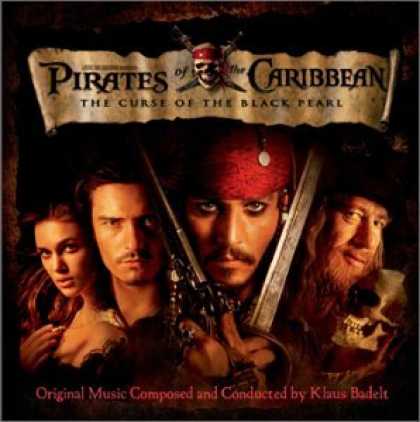
By the way, if you’re ever bored, watch Pirates of the Caribbean and replace every instance of the word “pirate” with “writer”.

Monday, December 14, 2009

Monday on my Mind! - Prince Charming


Hey there folks!

Welcome to another new edition of the blog- Monday on my Mind(MomM). Every Monday, I'll be writing about- you got it- what's on my mind.

In my last post, I mentioned Prince Charming, and it got me to thinking about the concept.

Women like to think of Prince Charming as the perfect man. Let's take a moment to examine the prototype, shall we. The two most famous Prince Charming's are probably the ones found in the fairy tales of Cinderella and Snow White.


So Cinderella's Prince Charming- What's so charming about him? He can dance the hell out of a waltz for sure! But do you really want a guy who falls in love at a ball, just because you're the best looking girl there and he never saw you before? I mean, it's cute to think that your guy will leave no stone unturned in pursuit of you. But really, a guy who will scour the entire land looking for you after one date? Not at all stalker-ish. (Insert sarcasm here.)


And Snow White's Prince Charming- hmmm. Let's ignore the fact that Snow White is a complete ditz to begin with, and just jump into where the Prince enters. So Ditz- I mean Snow White- has eaten this poisoned apple, since talking to strangers didn't almost kill her the first two times (more sarcasm), and she's fallen into a sleep that her housemates, the dwarves, can't wake her from. So they build her a glass coffin. In rides Prince Charming. And he does what any red-blooded man would do, seeing a seemingly dead girl lying in the middle of the forest- he falls in love! No hints of necrophilia anywhere in this story. (Mountains of sarcasm here.)

The ideal doesn't really exist. Even in fairy tales, where the world is a perfect place, Prince Charming is a necrophiliac stalker... not charming at all.

People are not perfect. In Tyler Perry's Why Did I Get Married, the male characters discuss the 80-20 rule, which in essence states:

You will only ever find 80% of the things you desire in an ideal mate, in one person. When your significant other supplies 80%, it's easy to look at others and find them attractive, because they have the 20% that your SO doesn't. But even though that 20% looks good at the time, if you walk away from the SO, you realise it's only 20% and the SO was the better deal.


Tyler Perry's "Why did I get married"

This in a nutshell is the 80-20 rule. It's also the Prince Charming dilemma. A generation of girls who grew up on fairy tales hoping to be the exception to every rule.

And the real Prince Charming? He might not be quite so charming or have such dashing good looks. He might not be able to ride a horse or live in a palace. He might have one green eye, one blue or, he might stay home from work to take care of you when you're sick. He might be the type of guy who walks for an hour to the nearest internet cafe so he can call you, during his 3 month exchange in Ghana.

Prince Charming is different for everyone.

But one thing's for sure. He's not perfect!